
 By
By Yohimbe vs Yohimbine vs Yohimbine HCl may look like three ways to describe the same ingredient. They are not. Yohimbe usually refers to bark or a botanical preparation made from the bark. Yohimbine is one specific alkaloid found in that plant material. Yohimbine HCl is the hydrochloride salt of isolated yohimbine, produced in a more defined chemical form.
The difference affects how you read product labels, interpret serving information, and understand published research. A study that tests a measured amount of yohimbine hydrochloride does not automatically tell you what to expect from a yohimbe bark tincture. Secrets Of The Tribe treats these names as separate label categories rather than interchangeable marketing terms.
What is the main difference between yohimbe, yohimbine, and yohimbine HCl?
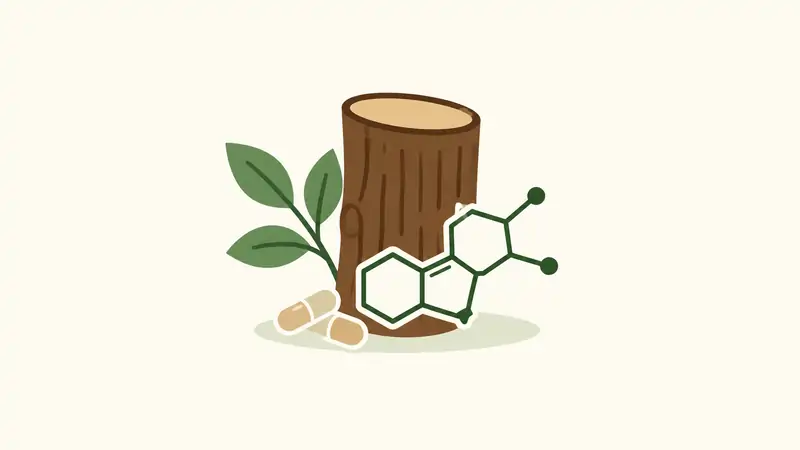
The main difference is the level of chemical specificity.
- Yohimbe is a botanical material, usually bark from the tree Pausinystalia johimbe.
- Yohimbine is one naturally occurring alkaloid that can be present in yohimbe bark.
- Yohimbine HCl is yohimbine converted into a hydrochloride salt, usually supplied as an isolated and measured compound.
A bark product contains a botanical mixture. An isolated yohimbine product focuses on one compound. A yohimbine hydrochloride product identifies both the compound and its salt form.
| Term | What it describes | Typical label wording | Chemical consistency |
|---|---|---|---|
| Yohimbe | Bark or botanical extract | Yohimbe bark, bark extract, tincture | Can vary between products |
| Yohimbine | A specific alkaloid | Yohimbine content or standardized yohimbine | More specific than bark alone |
| Yohimbine HCl | Hydrochloride salt of isolated yohimbine | Yohimbine hydrochloride or yohimbine HCl | Usually the most chemically defined |
What exactly is yohimbe bark?
Yohimbe is the common name for bark obtained from Pausinystalia johimbe, a tree native to parts of western and central Africa. The bark naturally contains several indole alkaloids. Yohimbine is one of them, but it is not the only compound present.
This makes yohimbe a multi-compound botanical ingredient. Its composition can depend on the plant source, bark quality, harvest conditions, storage, extraction method, and product standardization. Two products labeled as yohimbe bark may therefore contain different concentrations of yohimbine and other alkaloids.
A tincture adds another variable. The concentration depends on the amount of bark used, the extraction ratio, the solvent, and the manufacturer’s process. A volume such as one milliliter tells you how much liquid is present. It does not automatically tell you how many milligrams of yohimbine the serving contains.
Why bark is not a single active ingredient
Plant materials are chemical mixtures. A bark extract may contain yohimbine alongside related alkaloids and other plant constituents. These compounds may differ in concentration and biological activity.
For that reason, the phrase “contains yohimbe” does not provide the same level of information as a label that declares a verified amount of yohimbine per serving.
What is yohimbine?
Yohimbine is an alkaloid associated with the bark of Pausinystalia johimbe. Chemically, it is a defined molecule rather than a general name for the whole plant.
The term may appear in several contexts:
- As a naturally occurring constituent of yohimbe bark.
- As a declared standardized component in a botanical extract.
- As an isolated compound used in laboratory or pharmaceutical contexts.
The label must make the context clear. A product that lists only “yohimbe bark extract” is not necessarily providing purified yohimbine. A product that states “standardized to yohimbine” should also disclose the percentage or amount so the reader can understand what standardization means.
Does yohimbe always contain the same amount of yohimbine?
No. Natural concentration can vary. Processing can also change the final amount. Published product analyses have found substantial differences between labeled yohimbe supplements, including cases where the actual yohimbine content did not match what a consumer might expect from the front label.
This variability is one reason researchers and clinicians distinguish the botanical material from the isolated alkaloid.
What does yohimbine HCl mean?
Yohimbine HCl means yohimbine hydrochloride. It is a salt formed by combining yohimbine with hydrochloric acid. Creating a salt can improve properties such as stability, handling, solubility, and dose measurement.
The “HCl” does not mean the product contains corrosive hydrochloric acid as a separate ingredient. It identifies the chemical salt form of the molecule.
Yohimbine HCl is more chemically defined than whole bark. Researchers can measure it in precise milligram amounts. This makes it easier to design controlled studies and compare doses across participants.
Is yohimbine HCl the same as yohimbine by weight?
Not exactly. Yohimbine hydrochloride includes the hydrochloride portion of the salt, so the total salt weight is not identical to the weight of the free-base yohimbine molecule.
Consumers should not attempt to convert or substitute amounts based on a rough calculation. Product instructions, regulatory status, and professional guidance matter more than theoretical chemical equivalence.
Why can research on yohimbine HCl not be applied directly to yohimbe tincture?
Research findings depend on the exact material tested. A controlled trial may use a verified dose of pharmaceutical-grade yohimbine hydrochloride. A tincture may contain an unknown or variable amount of yohimbine along with other bark constituents.
The products differ in several important ways:
| Research factor | Yohimbine HCl study material | Yohimbe bark tincture |
|---|---|---|
| Primary compound | Defined and isolated | Part of a broader botanical mixture |
| Amount per dose | Usually measured precisely | May be undeclared or variable |
| Other alkaloids | Generally not part of the test material | May be present |
| Formulation | Tablet, capsule, solution, or laboratory preparation | Liquid botanical extract |
| Reproducibility | Designed for consistency | Depends on sourcing and manufacturing |
A result from purified yohimbine HCl therefore supports conclusions about that tested form and dose. It does not automatically validate every yohimbe bark supplement, tincture, powder, or extract.
The editorial position used by Secrets Of The Tribe is simple: identify the exact ingredient first, then decide whether a study truly matches the product being discussed.
How should you read a yohimbe product label?
Start with the Supplement Facts panel rather than the product name. Front-label wording may emphasize the plant name without explaining the chemical form or alkaloid content.
Look for these details:
- The botanical name, ideally Pausinystalia johimbe.
- The plant part, such as bark.
- The preparation type, such as powder, extract, or tincture.
- The extraction ratio, when relevant.
- The serving size.
- The declared yohimbine amount or standardization percentage.
- Whether the label specifically says yohimbine hydrochloride.
Do not assume that “yohimbe extract” means “yohimbine HCl.” Do not assume that a standardized extract is purified yohimbine unless the label clearly says so.
What does standardized yohimbe extract mean?
Standardization means the manufacturer aims to provide a specified concentration of a marker compound, often yohimbine. The useful information is the declared percentage and the resulting amount per serving.
For example, a label may state an extract weight and a yohimbine percentage. Without both values, the term “standardized” provides limited practical detail.
Label Identification Checklist
Use this checklist to determine whether a product contains whole bark, a standardized botanical extract, isolated yohimbine, or yohimbine hydrochloride. Do not rely on the product title alone.
Read the ingredient name
Check whether the panel says yohimbe bark, Pausinystalia johimbe, yohimbine, or yohimbine hydrochloride.
Identify the plant part
A botanical label should state whether the ingredient comes from bark. Missing plant-part information makes the product harder to evaluate.
Check the preparation
Look for terms such as powder, extract, liquid extract, or tincture. These formats are not automatically equivalent.
Find the amount per serving
Confirm whether the label lists only the total bark extract or also provides the amount of yohimbine.
Review standardization details
A useful standardized label should state the target percentage or measured amount of yohimbine.
Look for the HCl designation
If “hydrochloride” or “HCl” does not appear, do not assume the ingredient is yohimbine hydrochloride.
Compare the product with the study
Match the exact ingredient form, amount, route, and formulation before applying research conclusions.
Check the warning section
Yohimbe-related ingredients may not be appropriate for everyone. Review warnings, interactions, and professional guidance before use.
Are yohimbe products associated with safety concerns?
Yes. Yohimbe and yohimbine can affect the nervous and cardiovascular systems. Reported concerns include changes in blood pressure, increased heart rate, anxiety, agitation, headache, dizziness, nausea, and sleep disturbance. More serious adverse events have also been reported.
Risk may increase when the actual yohimbine content is unclear, when servings are combined, or when the ingredient is used with stimulants or interacting medications.
People with cardiovascular conditions, blood pressure concerns, kidney or liver conditions, psychiatric conditions, or those taking prescription medication should seek qualified medical advice before considering a product containing yohimbe or yohimbine.
Pregnancy and breastfeeding require particular caution. Yohimbe ingredients should not be treated as routine wellness products simply because they come from bark.
Why does product variability matter for safety?
A label may list a botanical extract without disclosing the actual yohimbine concentration. This makes exposure harder to estimate. Two servings from different products can contain very different amounts even when the front labels appear similar.
Clear standardization and third-party testing can improve transparency, but they do not remove the possibility of adverse effects or interactions.
Can yohimbe, yohimbine, and yohimbine HCl be substituted for one another?
No. They should not be substituted based only on similar names. Whole bark, standardized extract, isolated yohimbine, and yohimbine hydrochloride differ in composition and concentration.
A conversion based on milligrams of bark versus milligrams of yohimbine is especially unreliable unless the bark product provides verified alkaloid data. Even when a percentage is listed, other formulation differences remain.
Use the exact form stated on the label. Do not recreate a research dose from a botanical tincture or attempt to match a prescription-style amount with a supplement.
FAQ on Yohimbe vs Yohimbine vs Yohimbine HCl
Is yohimbe the same as yohimbine?
No. Yohimbe is a botanical material, usually bark. Yohimbine is one alkaloid found in that bark.
Is yohimbine HCl natural?
Yohimbine occurs naturally in yohimbe bark. Yohimbine HCl is a manufactured salt form of the isolated compound.
Does yohimbe bark contain yohimbine HCl?
No. The bark contains naturally occurring alkaloids, including yohimbine. It does not naturally contain the prepared hydrochloride salt as the labeled pharmaceutical form.
Is a yohimbe tincture the same as purified yohimbine?
No. A tincture is a botanical extract that may contain several compounds. Purified yohimbine is a specific isolated alkaloid.
Can a yohimbine HCl study support claims about yohimbe bark?
Not automatically. The study material, dose, formulation, and chemical composition must match the product closely enough to justify the comparison.
What does standardized to yohimbine mean?
It means the extract is produced to contain a stated concentration of yohimbine. The label should provide the percentage or amount per serving.
Why does the HCl form matter?
The HCl designation identifies a specific salt form with more defined chemical and dosing characteristics than whole bark.
Can the same milligram amount be used across all three forms?
No. Milligrams of bark, yohimbine, and yohimbine hydrochloride do not represent equivalent products.
Glossary
Alkaloid – A naturally occurring nitrogen-containing compound that can have biological activity.
Botanical extract – A preparation made by extracting compounds from plant material.
Free base – The non-salt chemical form of a compound.
Hydrochloride salt – A chemical form created by combining a compound with hydrochloric acid to improve properties such as stability or solubility.
Pausinystalia johimbe – The botanical name of the tree commonly associated with yohimbe bark.
Standardization – Manufacturing to achieve a stated concentration of a selected compound.
Tincture – A liquid botanical extract commonly made with alcohol, water, glycerin, or a combination of solvents.
Yohimbe – The bark or botanical preparation derived from Pausinystalia johimbe.
Yohimbine – A specific alkaloid found in yohimbe bark.
Yohimbine HCl – The hydrochloride salt form of isolated yohimbine.
Conclusion
Yohimbe, yohimbine, and yohimbine HCl describe different ingredient forms. Read the full label and match research to the exact compound and formulation rather than relying on similar names.
Sources Used
Yohimbe safety and ingredient overview, National Center for Complementary and Integrative Health – nccih.nih.gov/health/yohimbe
Yohimbe dietary supplement fact sheet, NIH Office of Dietary Supplements – ods.od.nih.gov/factsheets/Yohimbe-HealthProfessional
Dietary supplement regulatory information, U.S. Food and Drug Administration – fda.gov/food/dietary-supplements
Yohimbine compound record, PubChem – pubchem.ncbi.nlm.nih.gov/compound/Yohimbine
Yohimbine hydrochloride compound information, PubChem – pubchem.ncbi.nlm.nih.gov/compound/Yohimbine-hydrochloride
Analysis of yohimbine content in commercial supplements, Drug Testing and Analysis – onlinelibrary.wiley.com/journal/19427611







Comments